






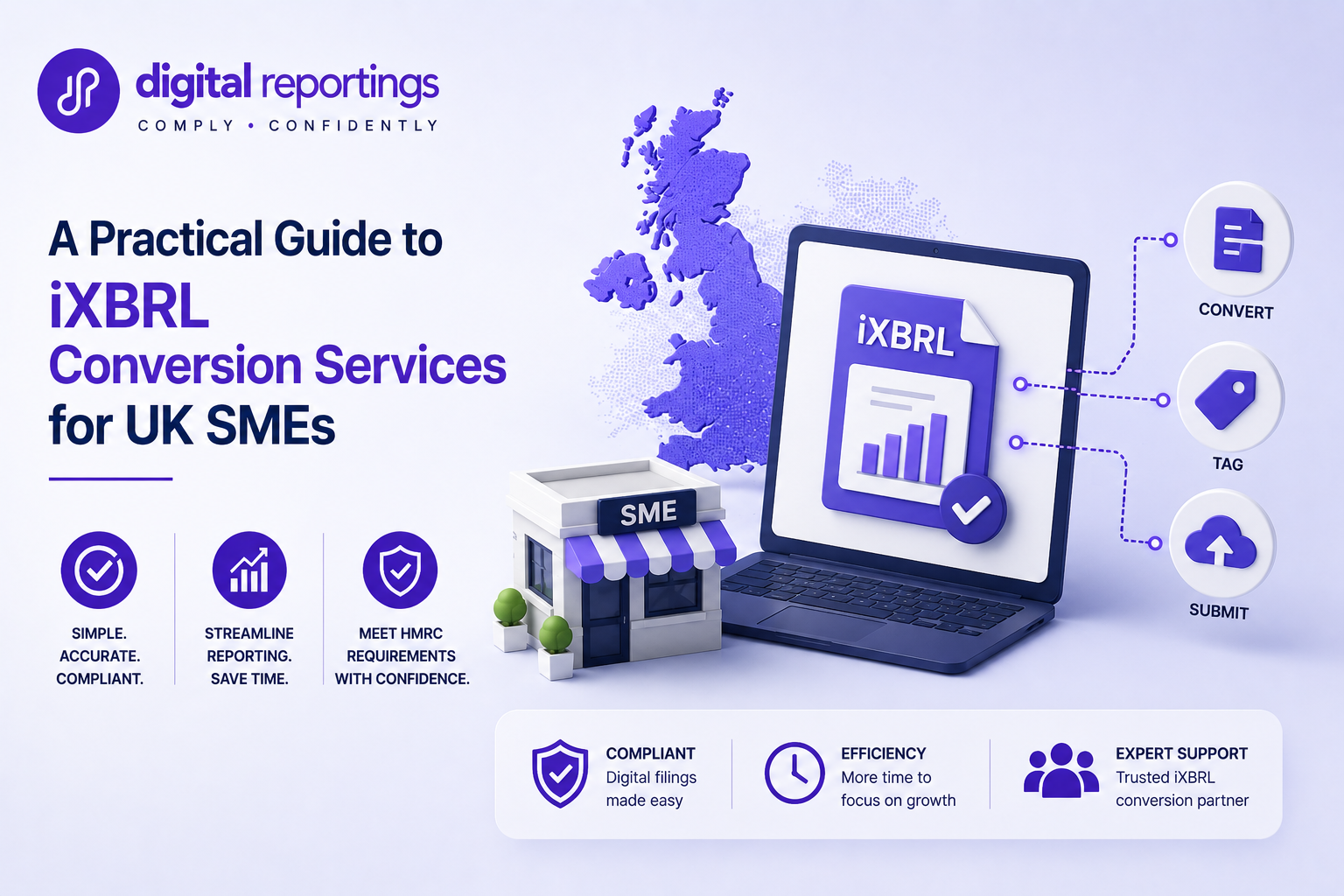
"Specialist iXBRL support helps sme companies improve filing confidence, reduce rework and keep UK reporting workflows moving."
- Digital Reporting UK
Small and Medium Enterprises (SMEs) form the backbone of the UK economy. From family-owned businesses to growing regional companies, SMEs contribute significantly to employment, innovation, and economic growth. However, alongside growth opportunities come increasing compliance responsibilities.
One area that many SMEs encounter during year-end reporting is iXBRL filing. While business owners often focus on sales, operations, and growth, financial reporting requirements remain an important part of maintaining regulatory compliance.
Understanding how iXBRL works can help SMEs reduce filing risks, improve reporting efficiency, and avoid unnecessary administrative challenges.
What is iXBRL?
iXBRL (Inline eXtensible Business Reporting Language) is the format used by HMRC for digital submission of company accounts alongside Corporation Tax returns.
Unlike traditional financial statements, iXBRL combines readable financial reports with embedded data tags that allow regulators to analyse submitted information electronically.
- The objective is to improve:
- Data quality
- Reporting consistency
- Regulatory efficiency
- Transparency
For SMEs, this means financial statements must generally be prepared in a format suitable for digital filing.
Why SMEs Should Pay Attention to iXBRL
Many SME owners assume iXBRL is simply a technical requirement handled by accountants.
While this is partly true, understanding its role can help businesses make better decisions regarding reporting processes and compliance management.
- Benefits include:
- Improved Compliance
Accurate reporting reduces the risk of filing issues and regulatory complications.
- Better Financial Governance
Structured reporting encourages stronger financial management practices.
- Increased Efficiency
Digital reporting processes can streamline year-end compliance activities.
- Future Readiness
As regulatory systems become more digital, SMEs that embrace technology will be better positioned to adapt.
Common Reporting Challenges for SMEs
- Limited Internal Resources
Most SMEs operate with lean finance teams.
Managing reporting obligations while running day-to-day operations can be challenging.
- Tight Filing Deadlines
Corporation Tax deadlines require careful planning and coordination.
- Changing Regulations
Business owners must keep pace with evolving reporting requirements and accounting standards.
- Dependence on External Advisors
Many SMEs rely heavily on accountants and compliance specialists for filing support.
The Role of iXBRL Conversion Services
Professional iXBRL conversion services help transform financial statements into compliant digital formats suitable for HMRC submission.
- These services typically include:
- Financial statement conversion
- Data tagging
- Validation checks
- Quality reviews
- Compliance support
For SMEs, outsourcing technical conversion work often provides a practical and cost-effective solution.
How Digital Reporting Supports SMEs
Digital Reporting works with SMEs across multiple industries, helping businesses prepare compliant iXBRL filings efficiently.
Our support enables business owners and finance teams to focus on operations while ensuring reporting obligations are met accurately and on time.
Frequently Asked Questions
Do all SMEs require iXBRL?
Most UK limited companies submitting Corporation Tax returns must file accounts in iXBRL format.
Can iXBRL filings be outsourced?
Yes. Many SMEs work with specialist providers to manage technical tagging requirements.
Does iXBRL affect accounting records?
No. It affects how financial information is formatted and submitted.
Why should SMEs care about digital reporting?
Effective reporting supports compliance, governance, and long-term business growth.
Relevant iXBRL Services
Need iXBRL Support?
Digital Reporting (UK) can support your team with secure, specialist iXBRL conversion, tagging and validation workflows.
Discuss iXBRL Support